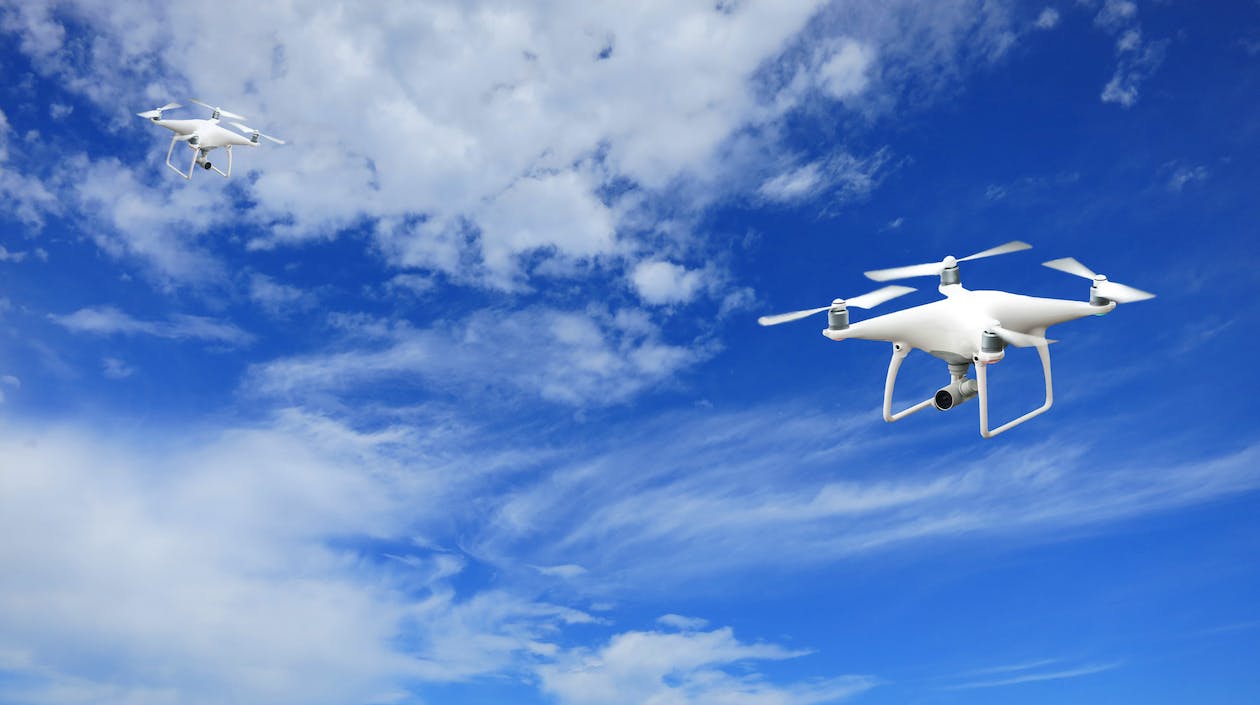
Unmanned Aerial Vehicles (UAVs), also known as drones, are aircraft which fly without a pilot, crew or passengers. The two types are automated and remotely piloted vehicles (RPVs). Having early roots back in the first world war, drones offer many benefits for emergency services and supply chain companies. Drones are important tools for providing advancements in many sectors. They are revolutionising numerous industries. So, how can drones be beneficial?
Drones in Healthcare
Drones can help save lives. This can include delivering life-saving products such as blood and snake bite serums to people needing them urgently. For instance, Project Bloodwing is using temperature-controlled drones in remote places in South Africa to deliver donated blood to people in need. In Sweden, a man who suffered a heart attack was saved by a drone which delivered him a defibrillator within minutes, proving how astonishing the technology can be.
Other uses in the healthcare industry include providing efficient healthcare from a distance, such as entering remote locations where conventional aircraft cannot do so and without the risk of putting a person in danger, optimising the time it takes them to get to the person they are seeking to find.
Drones in Weather Operations
Drones are also able to fly through dangerous atmospheric conditions and measure weather, as well as collect data. NOAA is testing an Altius-600 drone to be deployed into hurricanes to track them more effectively. This can help in providing more accurate predictions and can alert people quicker, giving them more time to evacuate or seek shelter, thus potentially saving their lives.
Drones in Surveillance
Safety and security is critical for people and drones are able to provide this. They offer quick and efficient surveillance to many organisations and locations. They can be used in construction to inspect structures or in agriculture to inspect the crops in a much faster way. In aviation, drones can be used to provide an extra pair of eyes performing airport inspections of nearby surroundings. For example, at São Paulo International Airport in Brazil they use them for fire detection and trespassing.
In addition, they can help with search and rescue operations. Mountain rescue teams in national parks and forests already benefit from this. It is estimated that drones have already helped to save over 880 people worldwide. A popular drone range in these operations is the DJI drone series.
Drones in Aviation
Drones have many uses in airport management. For example, the airport authorities deploy the RoBird drone to scare birds away from runways so that the flights won’t be hampered by bird strikes. Secondly, the use of Canard drones is particularly advantageous for NAVAIDs inspections around the airports, such as the PAPI lights.
Pyper Vision is another interesting development of drones which will aid airport operations by dispersing fog around the airports. It’s currently being tested out around airports in New Zealand.
They can also prove effective in air cargo. They will allow air charters to benefit from operating much more sustainable vehicles whilst reducing their operational costs. Most will offer a significant decrease in emissions of up to 80%, as they are able to run 100% synthetic fuel! The ones being developed will carry larger, more efficient payloads. Companies such as Dronamics are leading this development.
If you’re interested in learning more about how CharterSync can help you, get in touch! Our friendly, world-class sales and operations team are on hand 24/7 to offer round-the-clock support.